


A Strategic Navigator’s Guide to Technical Change Management
When innovation sweeps through an organization, one critical element often remains in the background: change management. Even the most technical transformations require thoughtful orchestration to align with organizational readiness. The consequences of neglecting this balance can be significant. Technical teams—experts in their domain but often unfamiliar with human-centered implementation strategies—frequently encounter adoption challenges that could have been avoided. This change management guide offers a pathway to success.
Technical change creates ripples of disruption even in the most stable organizations. When technical specialists lead these initiatives with their natural focus on optimization and functionality, they may overlook the essential work of shifting mindsets and cultivating readiness—the very foundation of effective change management.
At our consulting practice, we witness this pattern regularly. Recently, I collaborated with an organization that had implemented a new deployment platform affecting over 100 team members. Despite providing documentation and hosting a single training session, many employees struggled to understand the new process, its purpose, and its advantages. This created unnecessary friction between teams and delayed implementation timelines. Though we successfully realigned the initiative, a different approach could have prevented these challenges.
Partnering with internal change specialists or external transformation consultants provides the strongest foundation for success. However, when technical teams must lead the charge, they need to incorporate fundamental change management principles. The ADKAR model offers a structured framework that equips leaders with the strategy and enthusiasm needed to navigate change effectively.
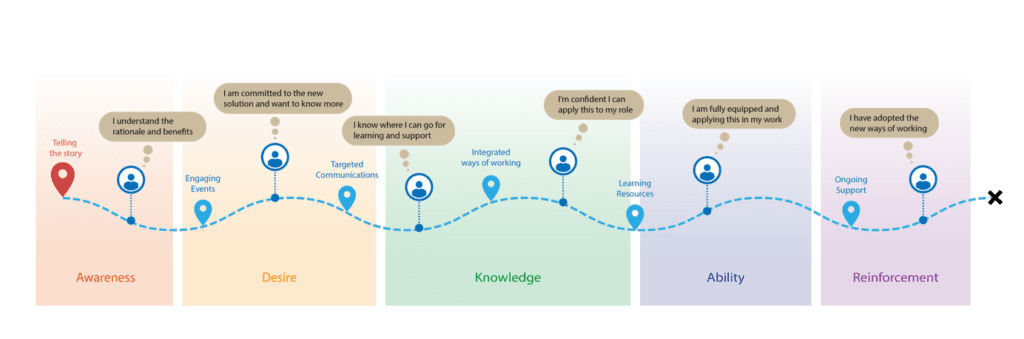
While the five ADKAR components may seem straightforward, understanding how to achieve each stage requires deeper exploration. Here’s our strategic navigator’s guide to managing technical change:
- Clearly Articulate Your “Why”
Technical specialists can easily become immersed in implementation details without considering the broader stakeholder perspective or organizational purpose. They might view new tools as simple upgrades rather than considering their impact on organizational objectives. Successful change begins with a crystal-clear understanding and communication of the driving purpose. This “why” connects technological advancements to organizational goals, which for technical changes often means enhancing productivity and reducing workloads long-term. Building awareness around this purpose helps team members understand the vision and encourages their buy-in.
- Foster Inclusive Involvement From Day One
Technical teams naturally gravitate toward consulting fellow experts throughout the change journey. However, when diverse organizational voices are included and valued, it creates belonging and builds trust. This inclusive approach gathers varied perspectives, providing comprehensive insights into potential challenges and opportunities. Early engagement not only creates a foundation for successful implementation but generates enthusiasm and desire for the change, establishing momentum for progress.
- Design Personalized Learning Experiences
Technical transitions typically require specialized training. Vendor-provided education often follows a standardized approach that doesn’t address specific organizational contexts. Instead, leaders should evaluate the unique needs of affected team members and create tailored learning pathways that address specific skill gaps and preferences. These might incorporate targeted sessions, digital resources, collaborative workshops, or—most effectively—a strategic combination. This personalized approach significantly enhances comprehension and retention.
- Practice Radical Transparency
Technical teams habitually work behind the scenes to minimize disruption expectations. However, communication forms the backbone of effective change. When implementing significant organizational transformation, leverage appropriate communication channels to maintain transparency about what’s changing, why it matters, and how it will happen. By openly sharing information about the change process and its implications, teams leading the initiative can reduce resistance while building organizational trust.
- Develop an Advocacy Network
Technical specialists often operate in relative isolation, but change champion networks can amplify messaging and accelerate adoption. A robust change network brings together diverse perspectives united by a shared purpose: advancing the transformation. These advocates inspire and influence colleagues within their functional areas as the organization navigates change. Consider it this way: conversations about the change will happen organically, but establishing a network allows implementation teams to shape the narrative constructively.
- Measure Meaningful Impact
Technical projects naturally emphasize delivery milestones, but these metrics hold limited value if they don’t achieve the fundamental “why.” Tracking change management progress alongside technical benchmarks is essential. Create a roadmap that segments the initiative into manageable phases with defined timelines, milestones, and metrics. Establish regular checkpoints to verify alignment with organizational objectives, maintaining flexibility to adjust course when necessary.
- Celebrate Progress Milestones
Each achievement, regardless of scale, represents advancement—not just toward implementation completion. By acknowledging wins throughout the journey, implementation teams recognize team members’ contributions while reinforcing a culture of positivity and resilience. These celebrations provide motivation during challenging phases. The key lies in making recognition meaningful so everyone feels valued for their contributions.
Each component of this change management guide contributes to building awareness, desire, knowledge, ability, and reinforcement—the core elements of successful change according to the ADKAR framework.
By integrating technical expertise with these strategic change management principles, organizations create cultures of resilience, collaboration, and adaptability—essential qualities for navigating transformation successfully. While implementation approaches vary based on project specifics, particularly for highly technical initiatives, these foundational principles remain constant regardless of the change landscape.
If you’re looking to strengthen your organization’s internal change management capabilities, connect with our team to discuss your strategic transformation objectives.

