


Stakeholder Communication Plan: A Practical Guide for Leaders Driving Change
Change initiatives rarely collapse because the strategy deck was weak or the funding fell short. They stall because people were never genuinely engaged. When employees and partners feel sidelined, they create their own narrative, and that narrative often pulls the effort off course.
A stakeholder communication plan prevents that drift. It is more than a calendar of emails and status updates; it is a structured strategy that clarifies who needs specific information, when they need it and why it matters. When designed thoughtfully, it builds the trust required to move a change forward. When handled casually, or skipped altogether, it leaves open space for rumor and pushback.
What Is Stakeholder Communication?
Stakeholder communication is the intentional, organized practice of engaging everyone connected to a change initiative, whether they are directly affected, hold decision-making authority or simply need visibility. It is proactive and structured; it does not rely on improvisation.
The difference is significant. Reactive communication, responding only after concerns surface, resembles patching holes mid-voyage. A well-crafted stakeholder communication plan identifies and addresses those pressure points before they disrupt progress.
Why a Stakeholder Communication Plan Matters
The impact of a stakeholder communication plan operates on several levels at once.
At a foundational level, the plan reduces risk and resistance to change. Confusion about the scope, timing or rationale behind a change ranks among the most common reasons initiatives lose traction or backslide. Clear, consistent communication limits that confusion. It also creates a shared reference point for project teams, ensuring executives, sponsors and communications partners are aligned rather than delivering mixed messages.
Beyond mitigating risk, a strong plan drives alignment. It provides a forum where business units and senior leaders agree on the core messages they will carry into their areas of the organization: the value being delivered, the outcomes being pursued, the milestones ahead and the expected timeline. That level of alignment requires deliberate coordination.
Equally important, the plan shapes employee sentiment. Communication goals shift over the life of a change effort. At times the focus is awareness; at others it is capability-building, crisis response or sustaining energy across a long-term transformation. Each objective calls for a distinct approach, and a disciplined stakeholder communication plan makes those differences explicit and manageable.
Start With Stakeholder Mapping
Effective communication begins with insight. Without a clear understanding of your stakeholders, even well-written messages will miss the mark. That is why stakeholder mapping forms the backbone of any stakeholder communication plan and should precede message development.
Stakeholder mapping provides a structured view of everyone connected to your initiative, grouped by their degree of influence and their level of interest. Those categories guide how closely each group should be engaged, how detailed the communication must be and how often outreach is required.
Robust analysis also uncovers preferences. Some stakeholders prefer formal briefings or company-wide town halls; others favor written updates they can review on their own schedule; still others respond best to peer dialogue rather than top-down messaging. Identifying these preferences in advance increases the likelihood your communications will resonate instead of being overlooked.
We have explored this process in depth in our stakeholder mapping tools article, including practical guidance on categorizing stakeholders by influence and interest. If you have not completed that step, begin there before drafting your stakeholder communication plan.
What a Stakeholder Communication Plan Should Include
A stakeholder communication plan delivers value through specificity. General intentions lead to diluted execution. At a minimum, your plan should document five core components.
The audience
Define who you are engaging, drawing directly from your stakeholder map. Not every stakeholder requires the same level of attention, and in complex transformations it may be appropriate to develop separate communication tracks for distinct audience segments.
The messages
Clarify what each audience needs to hear and what response you are seeking, whether that response is cognitive, emotional or behavioral. This is where your change narrative takes shape. The narrative should remain consistent across channels and clearly connect the initiative to broader organizational priorities. It provides context and meaning, not just information.
The channels and formats
Determine how messages will be delivered. Options may include intranet articles, executive video messages, email campaigns, in-person or virtual town halls, training sessions and team meetings. Channel selection should reflect your audience insights; what resonates with a plant-floor workforce differs from what engages a senior leadership team.
The timeline
Map communications to the milestones and deliverables within your change program. A thoughtful timeline also considers message saturation. Most organizations manage multiple initiatives at once, and stakeholders have limited capacity for updates. Your plan should reflect that reality.
Roles, responsibilities and measurement
Assign clear ownership for each communication and define how success will be measured. Measurement deserves focused attention, which we address below.

How to Write a Stakeholder Communication Plan: A Step-by-Step Approach
Step One: Complete Your Stakeholder Mapping
This is the essential starting point. Without it, you are operating on assumptions about your audiences, and assumptions carry real cost in business change management.
Step Two: Audit Existing Channels and Communications
Before launching new tactics, evaluate what is already in motion. Identify current campaigns and recurring communication rhythms. Review brand standards. Analyze engagement data from previous initiatives to understand what has resonated. This audit reduces duplication, highlights gaps and ensures your stakeholder communication plan complements the broader communications ecosystem instead of adding clutter.
Step Three: Define Your Goals
Each communication should serve a defined objective. At the plan level, articulate the outcomes you intend to achieve: increasing awareness within a specific group, shifting perceptions, prompting actions such as survey participation or workshop attendance, or maintaining confidence during uncertainty. Frame these as SMART objectives and link them directly to the broader goals of the change program and the enterprise.
Step Four: Identify and Segment Your Audiences
Use your stakeholder map to determine which groups the plan will address. Decide whether a single stakeholder communication plan can support all audiences or whether executives, people managers, frontline employees or customers require tailored approaches.
Step Five: Agree Key Messages and Tactics
Based on your goals and audience analysis, craft the core messages and select the tactics that will deliver them most effectively. Reinforcement matters. Key messages should appear across multiple channels and touchpoints throughout the life of the initiative. A single launch email rarely shifts understanding or commitment. Consider how the same foundational message can be conveyed through different formats and voices over time.
Step Six: Assign Roles and Responsibilities
Ambiguity undermines execution. Assign each communication to a named owner, whether that individual sits within the project team, executive leadership, line management, marketing or internal communications. Where budget or external vendors are involved, document those details clearly.
Step Seven: Build Your Timeline
Synchronize your communications schedule with project milestones and deliverables. Incorporate review checkpoints. Identify conflicts with other enterprise initiatives. Sequence communications so that each message builds logically on the last, creating continuity rather than a series of disconnected announcements.
Step Eight: Define How You’ll Monitor and Evaluate
Measurement enables refinement. Establish key metrics at the outset, whether email open rates, survey response levels, event attendance, pulse survey sentiment or the volume and themes of incoming questions. Integrate reporting into your regular project governance cadence so adjustments can be made as feedback emerges and circumstances shift.
Best Practices for Stakeholder Communication
Bring Stakeholders In Early
A frequent misstep in change programs is delayed engagement. By the time communication begins, key decisions have often been finalized without input from those most affected. Influential stakeholders should be engaged at the earliest planning stages. Their perspective builds ownership; ownership strengthens advocacy; advocacy accelerates adoption across the organization.
Align Leaders Before You Communicate Widely
Before messages reach the broader workforce, secure alignment among executives, project sponsors and visible influencers. Conflicting statements from leaders erode credibility quickly. When leadership communicates with clarity and consistency, it reinforces confidence in the direction of travel.
Build a Consistent Change Narrative
Your change narrative acts as the connective tissue across the stakeholder communication plan, from initial announcement through final milestone. It explains the rationale, the implications for affected groups and the intended future state. When every communication ties back to this narrative, the effort feels cohesive and purposeful.
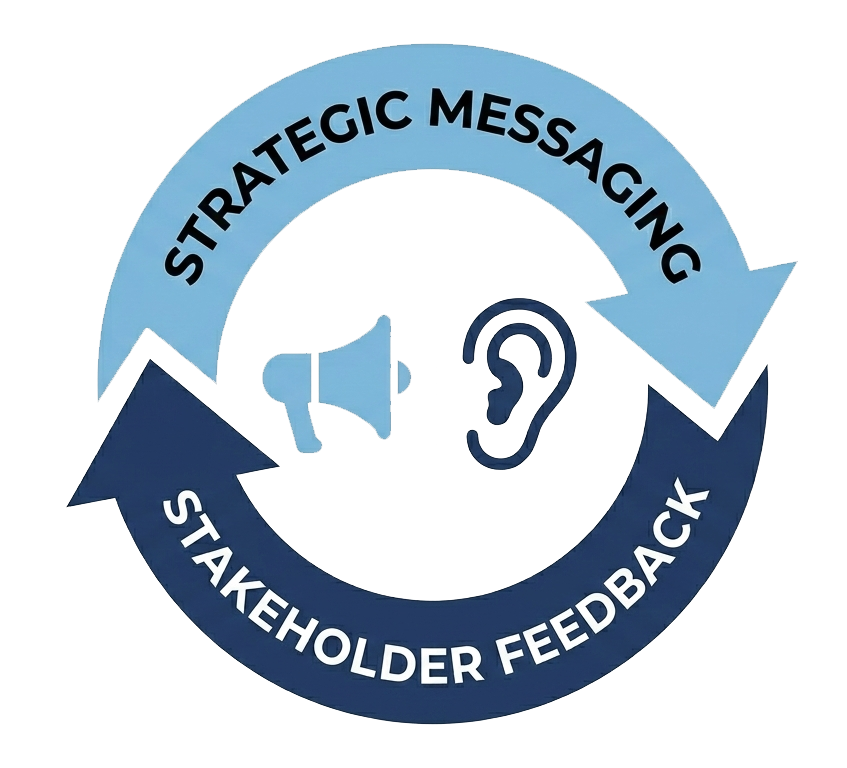
Make Communication Two-Way
Effective plans create structured opportunities for feedback alongside outbound messaging. Feedback highlights what is resonating, surfaces emerging concerns and gives stakeholders a sense of participation. Embedding two-way communication within your stakeholder communication plan allows for ongoing adaptation rather than delayed course correction.
Track, Report and Adapt
Communication planning continues throughout the life of the initiative. Make tracking and reporting a standing item within project governance. As data and qualitative feedback accumulate, refine your approach. Strengthen tactics that demonstrate impact and adjust those that fall short.
Stakeholder Communication Plan Template
To translate strategy into a practical roadmap that curbs rumors and builds alignment, use the stakeholder communication plan example below to specify who needs what information, when it should be delivered and through which channel.
| Phase / Pillar | Audience Segment | Key Message(s) | Channel & Format | Timeline/Frequency | Owner | Success Metric |
| Example: Awareness | Frontline Staff | The “Why” behind the change and how it affects daily responsibilities. | Town Hall & Weekly Newsletter | Launch Week; then Biweekly | Project Lead | 70% Email Open Rate; Q&A Volume |
How to Use This Template
To keep this document operating as a strategic tool rather than a simple schedule, apply the following principles:
- The Narrative Hook: In the Key Message column, move beyond facts. Include a compelling connection to broader organizational priorities.
- The Audit Check: Before completing the Channel column, revisit your audit from Step Two. Prioritize channels your audience already uses instead of adding unnecessary volume.
- The Two-Way Factor: Ensure at least one channel for every audience segment enables Stakeholder Feedback. This reduces the space where rumors can spread.
- Messaging Fatigue: When defining the Timeline, review overall communication density. Excessive frequency can overwhelm stakeholders who are already navigating multiple initiatives.
A Final Thought on Stakeholder Communication Plans
Architecture offers a useful principle: form follows function. A stakeholder communication plan grounded in real understanding of audience needs, preferences and concerns will look markedly different from one designed for internal convenience. The former requires deeper analysis and coordination. It delivers stronger results.
Organizations that navigate change effectively treat communication as a central project discipline. They invest time in understanding stakeholders before drafting messages, align leadership before broad rollout and listen as carefully as they speak. When communication is this deliberate, it does more than distribute information; it fosters shared commitment to the change ahead.
Get in touch
If you’re leading a change initiative and want to develop a stakeholder communication strategy that genuinely brings people with you, we’d welcome the conversation. We work alongside leadership teams to design and deliver communication plans that are grounded in real stakeholder insight, aligned to your change goals and built to last beyond the life of the project.
Get in touch to tell us where you are in your change journey, and we’ll explore together what good communication planning could look like for you.
Stakeholder Communication Plan FAQs
Stakeholder communication is the intentional process of engaging everyone connected to a change initiative, whether they are directly affected, hold influence over its success or simply need to stay informed. The emphasis is on intention. Stakeholder communication differs from occasional updates; it is a structured, ongoing discipline that ensures the right people receive the right messages at the right time. Executed well, it builds the trust that enables change. Executed poorly, it creates space for rumor and resistance.
Consider an organization rolling out a new technology platform. A stakeholder communication plan for this effort might include executive briefings to secure visible sponsorship, manager toolkits to support team-level conversations, company-wide town halls explaining the “why” behind the shift and targeted email updates for employees most directly affected. Each touchpoint is tailored to its audience, aligned to project milestones and connected through a consistent narrative. That coordinated approach defines effective stakeholder communication in practice.
Developing a stakeholder communication plan follows a logical progression. Begin with stakeholder mapping to clarify who is involved, their level of influence and their communication preferences. Audit existing channels and prior campaigns to understand the current landscape. Define clear communication goals, whether building awareness, shaping perception or prompting action. Identify the audiences your plan will address, agree on tailored key messages and select appropriate channels and formats. Assign ownership for every communication, align your timeline with project milestones and establish measurement from the outset so you can track performance and refine your approach.
A comprehensive stakeholder communications plan should outline five essentials: audiences, messages, channels and formats, timeline and measurement. Audience definition clarifies who you are engaging. Messages specify what they need to hear and the intended outcome. Channels and formats determine how information will be delivered, from town halls and email to video and workshops. The timeline aligns communication with project milestones while accounting for message volume. Measurement establishes how effectiveness will be tracked, enabling continuous improvement.
Stakeholders in a communication plan include anyone with a vested interest in the change initiative. This encompasses individuals directly impacted, those with influence over its outcome and groups that require visibility into progress. Depending on scope, stakeholders may include executives, people managers, frontline employees, project teams, customers, suppliers or regulatory bodies. Stakeholder mapping helps categorize these groups by influence and interest so communication depth and frequency can be calibrated appropriately.
Effective stakeholder communication strategies begin early, inviting stakeholders into dialogue during planning rather than after decisions are finalized. They rely on a consistent change narrative that links each communication to broader organizational objectives. They align channel and format with audience needs, recognizing that senior leaders and frontline teams engage differently. They incorporate structured feedback loops and adjust based on input. They also reinforce key messages across multiple touchpoints over time, understanding that sustained exposure is often required to build clarity and commitment.
Stakeholder communication skills equip leaders and project teams to engage audiences effectively throughout a change initiative. These skills include analyzing stakeholder needs, crafting clear and persuasive messages, selecting appropriate channels and timing and listening actively to feedback. They also encompass influencing capabilities, trust-building, managing resistance and aligning leaders around a shared narrative. Sound judgment about when to communicate proactively further strengthens these capabilities. Together, these skills bridge strategic intent and strong working relationships, making them essential for successful change leadership.
